
MIND Dental Clinic in Ansan logo

ALVEOLAR BONE GRAFTING

Alveolar Bone Grafting

If there is insufficient jawbone for implant placement, this treatment assesses the current bone condition and performs bone grafting in the areas that need it.

Alveolar bone grafting determines whether treatment is needed and which method to use by considering the height, width, and defects of the jawbone.

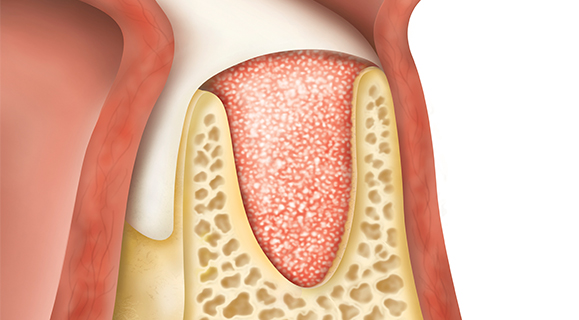
Cross-sectional illustration of a tooth and jawbone with bone graft material applied to the extraction site

When the bone quality at an implant site is poor or there is insufficient bone, bone grafting can create an environment that allows implant placement.

Just as a tree cannot stand in a pot without soil, an implant cannot be placed when there is insufficient jawbone.

In such cases, the deficient jawbone is supplemented to create enough bone to hold the implant firmly.

When bone grafting is performed appropriately, resorbed bone can be reinforced to secure a stable long-term prognosis, and implants can be placed even where placement was previously impossible.

Regular checkups by period – every 3 months, 6 months, and 1 year

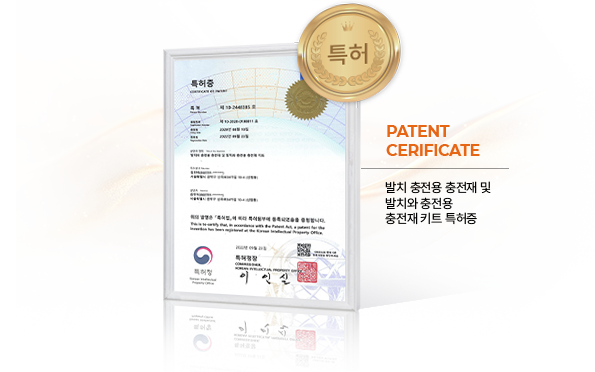
MIND Dental Clinic's extraction socket and graft material kit patent

Patent certificate and gold patent badge for the extraction socket filling material and extraction socket filling material kit

01

MIND Dental Clinic's extraction socket and graft material kit patent

To improve precision and outcomes in implant and bone graft treatment, MIND Dental Clinic holds a patent for Filling Material for Extraction Sockets and a Filling Material Kit for Extraction Sockets. This patented technology adds stability and efficiency to advanced procedures, including alveolar bone grafting, socket preservation, and sinus lifts, helping our team provide more precise and systematic care. With this expertise, MIND Dental Clinic is committed to delivering more complete treatment results for every patient.

02

Pre-treatment for alveolar bone grafting

Alveolar Bone Grafting: Before and After

You can review the treatment progress of actual alveolar bone grafting procedures performed at MIND Dental Clinic.

  • ※ After implant treatment, pain, swelling, bleeding, infection, nerve injury, peri-implantitis, and other complications may occur depending on the individual. Please proceed only after thorough consultation with your dental care team.
  • ※ The person in the before and after photos is the same individual.
  • ※ The photos were taken under the same conditions, including location and lighting.
  • ※ Treatment results may vary depending on individual conditions.
  • ※ These are actual treatment cases of patients treated at this clinic.
  • ※ The before and after dates are shown in the photos, and no retouching has been applied.

Advantages of Alveolar Bone Grafting

  • 01

    Implant Retention

    Alveolar bone is grafted into areas with insufficient jawbone to help keep the implant firmly supported.

    It supplements areas with insufficient jawbone and can help create the bone support needed for implant placement.

  • 02

    Reduced Alveolar Bone Resorption

    It reduces the amount of alveolar bone that would otherwise naturally resorb after extraction.

    Bone grafting may be performed when needed, taking into account alveolar bone changes and defects after extraction.

  • 03

    Considering stability in treatment planning

    Implant placement and bone grafting can be performed simultaneously without harvesting the patient's own bone, with favorable surgical outcomes expected.

When to consider alveolar bone grafting

Alveolar bone grafting regenerates insufficient jawbone for implant placement.

  • Missing Teeth

    Grafting can help when teeth have been missing or substantially reduced in number for a long time.

  • Inadequate Bone Thickness

    When bone is too thin or too low, reinforcement is needed for stable implant placement.

  • Implant Placement Immediately After Extraction

    Bone grafting helps with one-day implants because implants must be placed immediately after extraction.

  • Periodontal Disease

    Bone loss from inflammation often makes grafting necessary before implant placement.

Alveolar Bone Grafting Methods

Gum conditions vary by individual. Consult your dentist to choose the most suitable method.

Cross-section of a tooth and jawbone with bone graft material applied to the extraction site during socket preservation

METHOD 01

Socket Preservation

This method aims to reduce changes in the shape and volume of alveolar bone after extraction by applying bone graft material to the extraction site when needed.

Socket preservation is a procedure that prevents natural alveolar bone resorption following extraction.

Surgical Information

Extracting a tooth leaves an empty socket where the root was, creating a hollow space in the alveolar bone.

The alveolar bone around the socket naturally resorbs under external pressure, gradually losing its shape and volume.

Socket preservation grafts bone into the socket left by extraction to minimize bone loss and protect the alveolar bone. MIND Dental Clinic holds a patent for socket preservation.

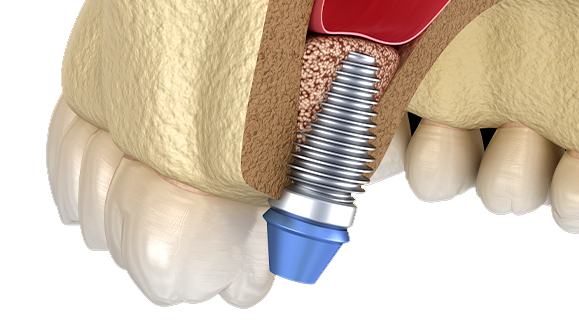
Cross-section showing bone graft material and an implant beneath the maxillary sinus during a sinus lift

METHOD 02

Sinus Lift

When jawbone height is insufficient in the upper molar area, the maxillary sinus and surrounding bone structures are assessed to determine the appropriate bone grafting method.

This surgery creates space for an alveolar bone graft by lifting the maxillary sinus, an air-filled cavity in the upper jaw that can make implant placement difficult.

Surgical Information

The maxillary sinus is an air-filled cavity that reduces the available alveolar bone height in the upper jaw, where bone quality is already relatively poor, making implant placement more difficult.

However, lifting the lining of the maxillary sinus makes it possible to place a bone graft in the resulting space.

This space can be used to increase bone volume, allowing implants to be placed even in an upper jaw with insufficient bone.

MIND DENTAL YOUTUBE

LOCATION

Opening Hours and Directions

MIND Dental Clinic in Ansan

4F, Central Tower, 72 Gojan-ro, Danwon-gu, Ansan-si, Gyeonggi-do

031-401-9375
MIND Dental Clinic Opening Hours
Monday – Thursday10:00 ~ 20:00
Friday10:00 ~ 18:00
Saturday · Sunday · Public holidays10:00 ~ 16:00

MIND DENTAL CLINIC

Consultation & Appointments

If you have any questions, please call us.

You can also request an appointment through Naver Booking.